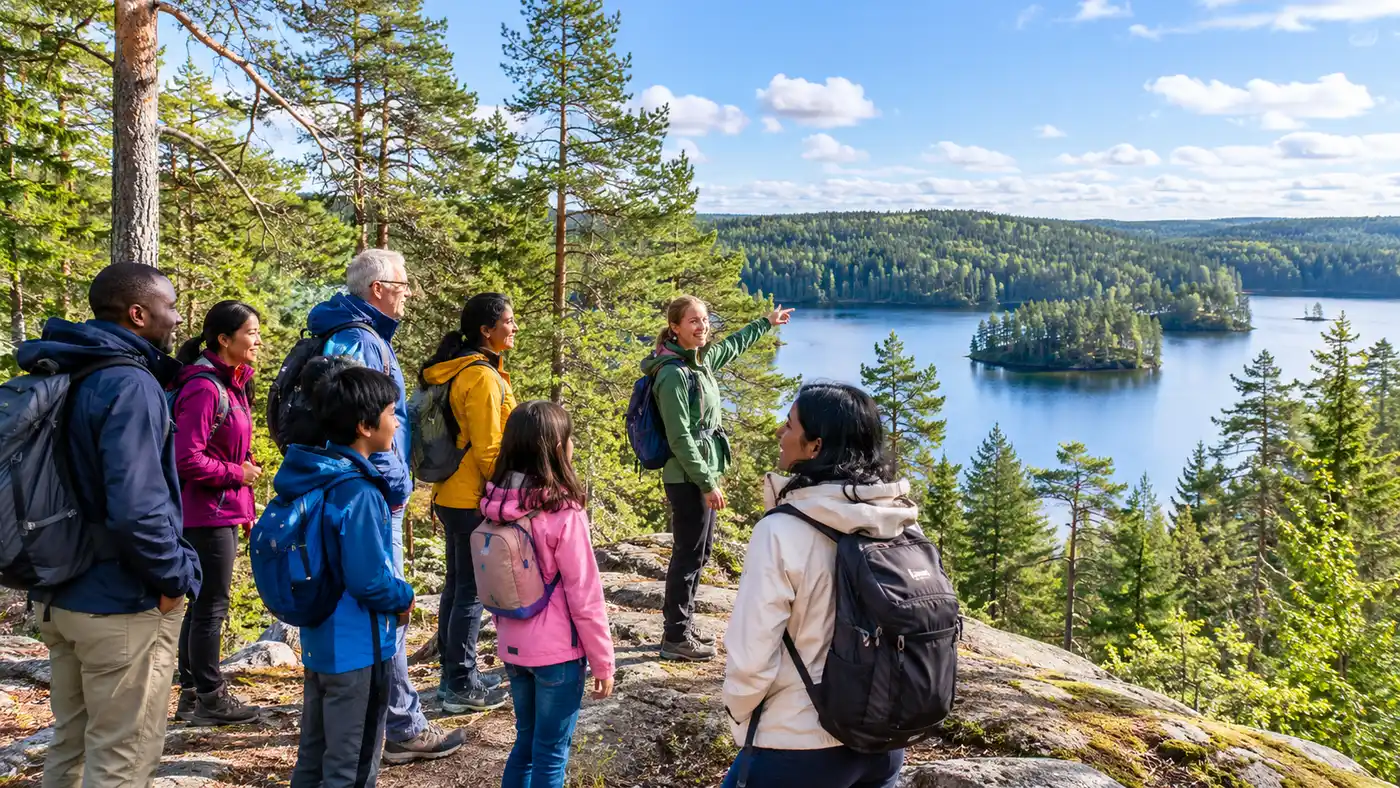
Nuuksio National Park Weather and Seasons Guide
You can check three different radar apps before stepping onto the train at Helsinki Central, and the forest will still do whatever it wants. Most visitors assume that because the park sits under forty kilometers from the coast, the conditions will match the capital street for street. They do not. Understanding nuuksio national park weather means realizing that this pocket of southern Finland creates its own pocket conditions, where cold damp air pools into shaded mossy gorges and granite cliffs bake under the midday July sun.
A twenty-minute bus ride pushes you into old-growth spruce terrain where the temperature regularly drops three or four degrees below downtown Helsinki. Snow lingers in deep clefts weeks after the city sidewalks have dried up into dusty asphalt. If you show up unprepared, you will either freeze in November drizzle or get eaten alive by horseflies beside a swamp in late June. Here is what each season actually feels like out on the trails, without the sugarcoating.
Book your nuuksio national park experience:
Nuuksio Weather and Climate Breakdown
Finnish meteorologists talk about four distinct seasons, but anyone living near the Nuuksio lake plateau knows there are at least six. You have early spring, which is pure ice and mud, and late autumn, which is simply grey darkness with wet bark. The weather swings violently between late January blizzards and late July heatwaves that turn forest hollows into humid terrariums.
Pack ice on the lakes usually begins forming during late November or early December, though recent mild winters have pushed solid freezing into mid-January. Once the lakes freeze thick enough, locals cross them on Nordic touring skates or cross-country skis. By late April, the melt is loud and aggressive. Streams carve through walking paths, and the smell of decomposing pine needles hits you the second you step off the bus at the Haukkalampi trail hub.
The table below gives you realistic monthly averages based on local meteorological station readings around Espoo and the lake district.
| Month | Avg Day Temp | Avg Night Temp | Daylight Hours | Ground Conditions |
|---|---|---|---|---|
| January | -3°C | -8°C | 6 hours | Snowpack, thick lake ice |
| February | -2°C | -9°C | 9 hours | Deepest snow of the year |
| March | 2°C | -5°C | 12 hours | Refrozen crust, wet snow |
| April | 8°C | 0°C | 15 hours | Mud, slush, melting lakes |
| May | 15°C | 5°C | 17 hours | Dry trails, fresh foliage |
| June | 19°C | 10°C | 19 hours | Firm ground, midnight twilight |
| July | 22°C | 13°C | 18 hours | Warm rock, warm lake water |
| August | 20°C | 12°C | 15 hours | Damp moss, warm afternoons |
| September | 14°C | 7°C | 13 hours | Wet trails, clear mornings |
| October | 7°C | 2°C | 10 hours | Slippery leaves, morning frost |
| November | 2°C | -1°C | 7 hours | Freezing mud, black ice |
| December | -1°C | -5°C | 5.5 hours | Early snow, unstable ice |
Summer in Nuuksio: Midnight Sun, Berries, and Swims
Summer is loud. Thrushes wake you up at 3:30 in the morning, and the lakes are flat like polished glass until the afternoon breeze picks up. Planning a trip around nuuksio national park summer conditions gives you the easiest hiking environment, but heat in Finnish forests feels heavier than you think. When the mercury hits 26°C in July, the pine canopy holds the moisture from surrounding peat bogs, making climbs up exposed granite ridges surprisingly sweaty work.
Water temperatures in lakes like Ruuhijärvi and Valklampi climb to around 20°C by the middle of July. Swimmers jump straight off the wooden jetties or smooth shoreline rocks. Honestly, packing a quick-dry towel is non-negotiable between June and late August. You will walk three miles, see a clear black-water lake framed by water lilies, and want to drop your pack immediately.
The berries show up fast. Wild bilberries carpet the forest floor by mid-July, followed by lingonberries along the drier ridges in August. You are legally allowed to pick as many as you can carry under Finnish Everyman's Right. The trade-off is the insect life. Deer keds - flat, wing-dropping parasitic flies that crawl into your scalp - become an absolute nuisance near marshy ground starting in late August. Bring a brimmed hat and light repellent, though honestly, standard sprays barely deter them.
Pro tip: Hike during the quiet window between 7:00 PM and 10:00 PM in June. The midday humidity breaks, the tourist groups return to Helsinki, and the golden hour lighting across the forest ponds lasts for hours.
Autumn Mists and November Shadows
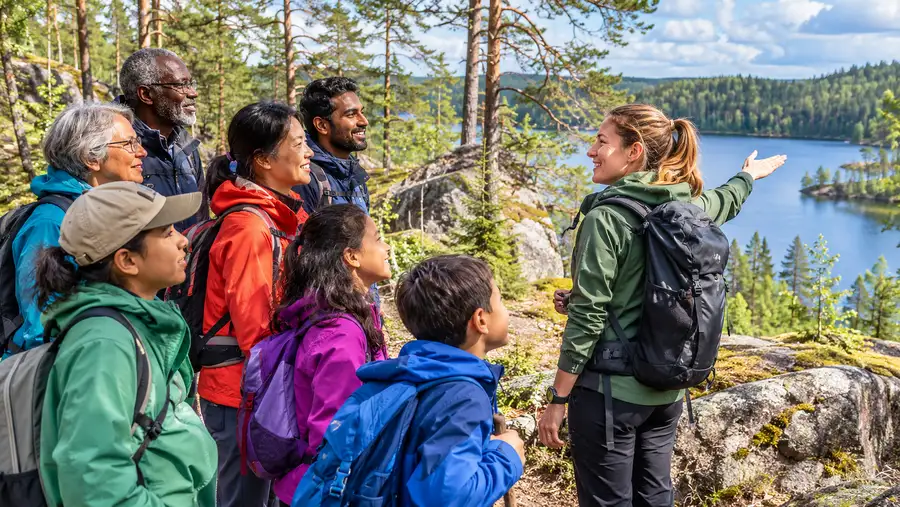
September is stunning. The Finnish call this seasonal shift ruska, when the birch trees turn bright yellow and the aspen leaves flutter red against dark green spruce trees. Experiencing nuuksio national park autumn walks means brisk 11°C air, clean breathing, and trails smelling of decaying leaves and wet earth. It is my favorite time to be out here, hands down.
Mushroom foragers arrive by the carload on September weekends. Golden chanterelles sprout along the edges of well-trodden paths, while yellow foot mushrooms hide under moss blankets well into October. If you visit then, you will share the trails with quiet locals carrying woven birch baskets and small curved knives.
Then comes November.
Nobody writes postcards about nuuksio national park november, and for good reason. The leaves have dropped, leaving bare grey birch trunks against a leaden sky. Rain falls sideways. Daylight collapses to barely seven hours, and by 3:15 PM you are fumbling for your headlamp among dripping pine boughs. The trails turn into slicks of exposed tree roots and slick clay mud. If you choose to hike now, keep your expectations grounded.
- Footwear requirements: Waterproof boots with aggressive rubber lugs; wet granite slabs are slick as greasy Teflon in late autumn.
- Visibility gear: A headlamp with at least 250 lumens, plus a spare battery pack stored close to your body heat.
- Thermos duty: Hot berry juice or tea in an insulated flask; the damp chill cuts straight through wool sweaters once you stop walking.
Book your nuuksio national park experience:
Nuuksio National Park in Winter: Snow, Ice, and Frozen Lakes
Winter turns this landscape into a silent white room. Experiencing nuuksio national park in winter requires a mental adjustment because everything moves slower. Walking a three-kilometer loop that takes 45 minutes in July can easily swallow two hours when you are breaking through sixteen inches of crusted powder.
December is a transition gamble. Visiting nuuksio national park december often means walking through an eerie half-world where the ground is frozen hard as iron, but deep snow has not yet arrived. The days are the shortest of the year. If you catch clear skies around the winter solstice, the sun skims the horizon at noon, casting absurdly long blue shadows across the frosted pines. By nuuksio national park january, true winter has usually locked in. Temperatures can plummet to -18°C during high-pressure cold snaps, turning your exhaled breath into frost on your jacket collar.
Foreign visitors searching for helsinki nuuksio national park wetter updates or checking Dutch forecast boards for nuuksio national park weer often wonder if the park stays open. It never closes. There are no gates. The public fire pits remain stocked with dry birch logs by the park service, though splitting frozen wood with a rusty camp axe in -10°C will quickly remind you why proper mittens matter. If you are planning an extended trip out from the capital during a nuuksio national park helsinki winter stretch, check the how to get to Nuuksio from Helsinki guide before relying on weekend regional bus timetables, which thin out considerably in the snow season.
Note: Never walk onto lake ice simply because you see footprints. Nuuksio lakes are fed by hidden underwater springs and flowing swamp channels that keep ice dangerously thin in localized patches all winter long.
Before heading out during mid-winter, check the local nuuksio national park webcam at the Finnish Nature Centre Haltia. It provides a real-time snapshot of snow depth and cloud ceiling right at the edge of the park boundary, saving you an unnecessary trip if a sudden warm front has turned the trails into grey slush.
Spring Thaw and Mud Season: What to Expect in May
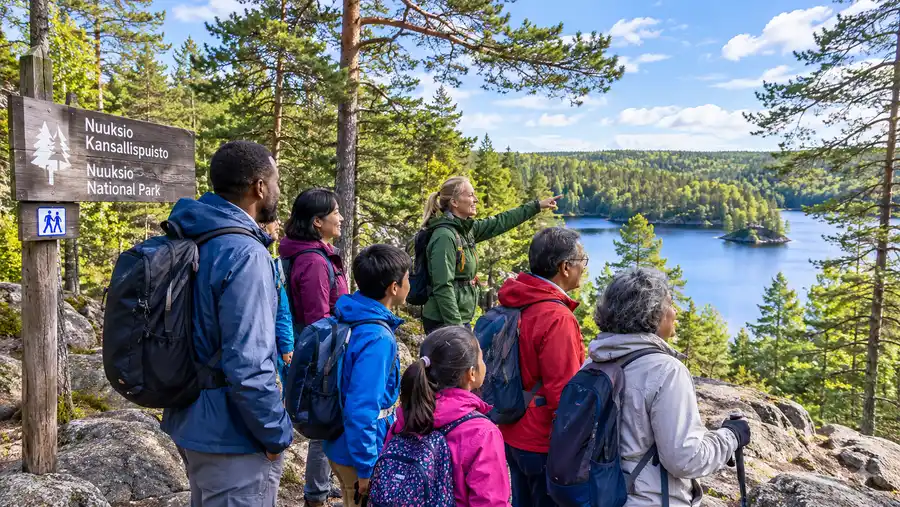
Spring arrives late and grumpy. March looks like winter but acts like a freezer defrosting in slow motion. Nuuksio national park spring hiking does not really hit its stride until the ice finally breaks on Haukkalampi and Sahajärvi around the third week of April. Until then, you face kelirikko - the notorious mud season where trail surfaces collapse into boot-sucking slurry.
Visiting nuuksio national park in may is a completely different story. The woods wake up in a rush. Wood anemones carpet the valley floors in white blossoms, and the canopy turns that tender, electric neon-green that only lasts for about ten days. Migratory wood warblers and cuckoos echo across the water. Daytime temperatures hover around a comfortable 14°C, which makes tackling longer routes like the Korpinkierros loop pure joy.
You can check the specific distances and elevations in our guide to Nuuksio National Park hiking trails to plan a route suited to current ground firmness. Spring winds dry the rocky ridges fast, but valley paths remain boggy until the sun climbs higher toward the summer solstice.
- Traction cleats: Keep microspikes in your daypack through mid-April; north-facing cliff paths hold blue ice long after parking lots melt.
- Tick awareness: Castor bean ticks awaken as soon as daytime temperatures cross 5°C, making evening body checks essential after walking through high brush.
- Firewood availability: Spring brings high camper traffic to shelters; visit mid-week if you want a guaranteed dry spot by the hearth.
Frequently Asked Questions about nuuksio national park weather
What is the rainiest month in Nuuksio?
August and October tend to record the highest rainfall volumes, often featuring slow-moving Atlantic low-pressure fronts that soak the forest for two or three consecutive days.
Can you hike in Nuuksio during the middle of winter without snowshoes?
Yes, provided you stick to popular paths like the Punarinnankierros trail near Haukkalampi. Foot traffic packs the snow down firmly within 24 hours of a storm, though you will want slip-on crampons for icy uphill scrambles.
Does Nuuksio get completely dark during December days?
It never goes pitch black at noon, but heavy overcast skies coupled with short five-hour daylight windows create a perpetual dusk. Always bring a reliable light source, even if starting at midday.
Are bugs a problem throughout the entire summer?
Mosquitoes peak in late June and early July, especially near standing bog ponds. By August, mosquitoes decline significantly, but deer keds become active in wooded clearings until the first hard frost kills them off.
Quick Reference
- Warmest month: July (daily highs averaging 22°C)
- Coldest month: February (frequent drops below -10°C)
- Snow cover window: Late December through early April
- Peak fall foliage: September 15 to October 5
Book your nuuksio national park experience:
The Bottom Line
Nuuksio does not have bad weather so much as visitors wearing the wrong layers. A damp November afternoon with empty trails and mist hovering over black swamp water can be just as memorable as a swim across a sunlit pond in July, provided your feet stay dry and your jacket cuts the wind. Check the forecast before you leave Helsinki, throw an extra wool blend layer into your daypack just in case, and let the forest show you whatever mood it happens to be in.
Read more about nuuksio national park.